

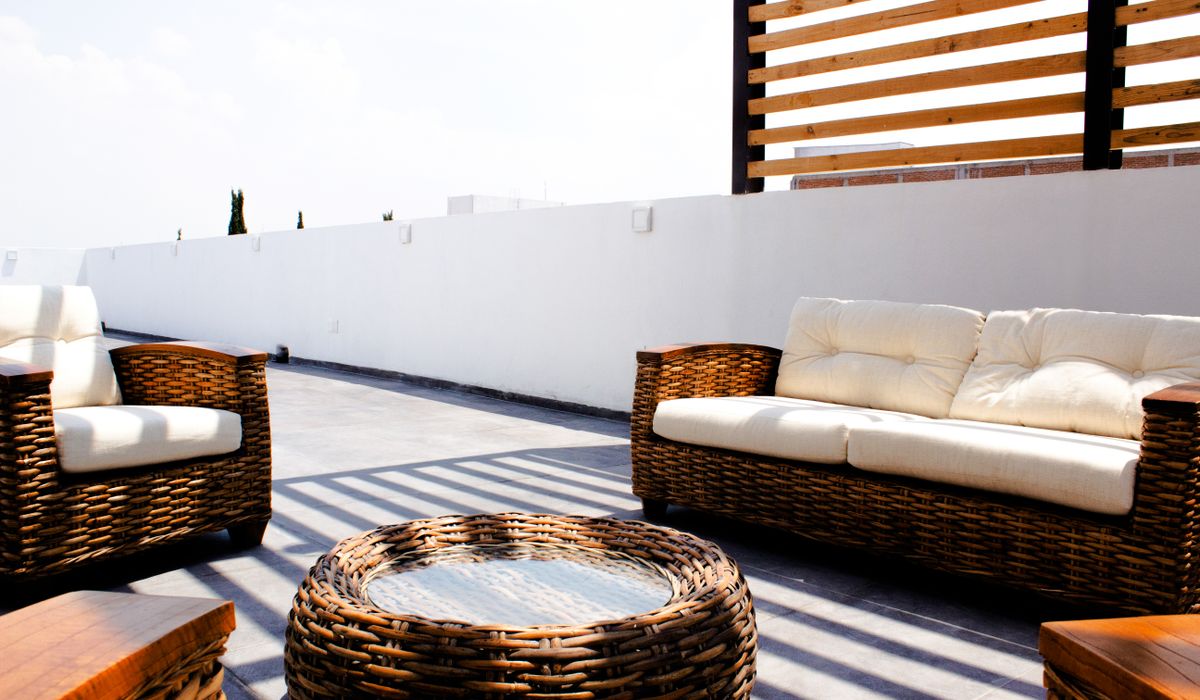
Choosing a patio awning for British weather
Why a British awning has to work harder than a sunshade
A patio awning designed for a Mediterranean summer only has to do one thing well: block the sun. The same awning on a patio in Leeds, Bristol or Aberdeen is expected to shrug off a squall, shed a shower, survive a gust off the back of the house and still look presentable at the end of a patchy August. That is a lot to ask of a piece of fabric on two folding arms.
The sensible starting point is to accept that our weather tests an awning three ways at once: UV, rain and wind. Sun fades the fabric. Damp encourages mildew on a rolled-up roller. Wind is the one that actually breaks things. A fully extended awning behaves like a sail, and gusts will find their way under the front bar and try to lift it. Everything below is really about limiting the damage that wind and water can do.
A full cassette is the best upgrade for wet weather
When an awning is retracted, where does the fabric sit? That question separates the cheap options from the ones that last. A full cassette awning houses the fabric, the roller and the folding arms inside a rigid aluminium casing when it is wound in, so nothing is left exposed to rain, grit or bird mess.
- Full cassette — fabric, roller and arms all enclosed. The best protection for a British garden, and the neatest look when closed.
- Semi-cassette — the fabric is covered but the arms stay visible. A reasonable compromise if the budget will not stretch.
- Open roll — no housing at all. Cheapest, and fine under a permanent canopy, but the fabric stays damp and grubby for longer.
Cassettes add bulk, typically a housing 15 to 25 cm deep depending on the size of the awning, so check clearance above doors and windows before you commit.
Getting the width and projection right
Width is the easy part. Match it roughly to the patio or the seating area you want to cover, and remember that most domestic awnings fall between 2.5 m and 4 m wide.
Projection — how far the awning reaches out from the wall — matters far more in our climate. Typical arms run from 1.5 m to 3 m, and every extra metre adds leverage on the arms and the wall fixings. A 2.5 m projection gives genuinely useful midday shade from roughly May to August. Longer arms shade a deeper patio but flex more in a gust.
Two practical measurements to take before ordering:
- Mount the cassette at least 2.2 to 2.5 m above the ground, so people can walk beneath the front bar without ducking.
- Allow a fall of around 20 degrees from the wall to the front bar. That lets rain run off forwards rather than pooling on the fabric, without leaving a gap for low evening sun to stream underneath.
Fabric grade and frame quality
This is where most of the money goes, and where cheap awnings show their age after two seasons.
- Solution-dyed acrylic, around 260 to 320 gsm, is the fabric to aim for. The colour is locked into the fibre rather than printed on, so it resists fading, and it stays supple and breathable.
- Coated polyester is lighter and cheaper but tends to crease, fade and eventually crack.
- Water repellency, not waterproofing. Look for a fabric that beads rain but still breathes. A fully sealed fabric traps condensation, and a damp awning rolled away in the evening is a mildew farm.
- Arms, roller and fittings. Powder-coated aluminium arms, and stainless steel or galvanised brackets. Near the coast, salt air makes short work of cheap plated fixings.
- Wind class. Awnings are rated under EN 13561, from Class 0 to Class 3. For an exposed site or a corner plot, look for Class 2 or Class 3.
Motors, remotes and sensors
A manual crank is perfectly adequate for a small awning that goes out occasionally. Once you are past roughly 3 m wide, or you have chosen a cassette, motorising is worth the extra.
- A remote control handset saves a lot of winding, and many motors include a soft start and stop so the fabric does not jolt.
- A wind sensor is close to essential here. An anemometer on the wall or roof retracts the awning automatically once gusts pass a set threshold — usually the moment you are out and cannot do it yourself.
- A rain sensor winds the awning in at the first drops, which is useful if you tend to leave it out.
- Sun sensors and timers extend it in the morning and retract it at dusk, handy if you use the patio at the same time each day.
Hardwired power is the most reliable, though solar or rechargeable battery motors avoid chasing a cable through the wall. Whichever you choose, check there is a manual override eye so you can wind the awning in during a power cut.
Siting, installation and aftercare
Wall fixings should reach solid masonry, never just the render. Older brick, stone or cavity walls may need spreader plates or a wider spread of bolts, and it is worth having the wall assessed before you buy rather than after. Outdoor electrics need a suitable IP rating and RCD protection.
Think about where the weather comes from. A south- or west-facing patio takes the brunt of our prevailing wind and rain, so an awning there will be worked hardest. A side screen on the windward edge makes a surprising difference to how much use you get from the space.
Aftercare is mostly habit. Retract the awning whenever you leave the house or go to bed — the gust that damages it is almost always the one that arrives while nobody is watching. Let the fabric dry before rolling it away if you can, brush off leaves and blossom, and clean it with mild soap and water rather than detergent or a pressure washer. A quick check of the arms and brackets each spring will catch loose fixings before they become a problem.


Garden Sheds
-
Measure the width and projection you need, then check fixing heights. Allow for the cassette and bracket clearance.

Gazebos




-

Long established fact that a reader will be distracted
-

Long established fact that a reader will be distracted
-

Long established fact that a reader will be distracted




Summerhouses
Karla Gleichauf
12 May 2017 at 05:28 pm
On the other hand, we denounce with righteous indignation and dislike men who are so beguiled and demoralized by the charms of pleasure of the moment
M Shyamalan
12 May 2017 at 05:28 pm
On the other hand, we denounce with righteous indignation and dislike men who are so beguiled and demoralized by the charms of pleasure of the moment
Liz Montano
12 May 2017 at 05:28 pm
On the other hand, we denounce with righteous indignation and dislike men who are so beguiled and demoralized by the charms of pleasure of the moment