

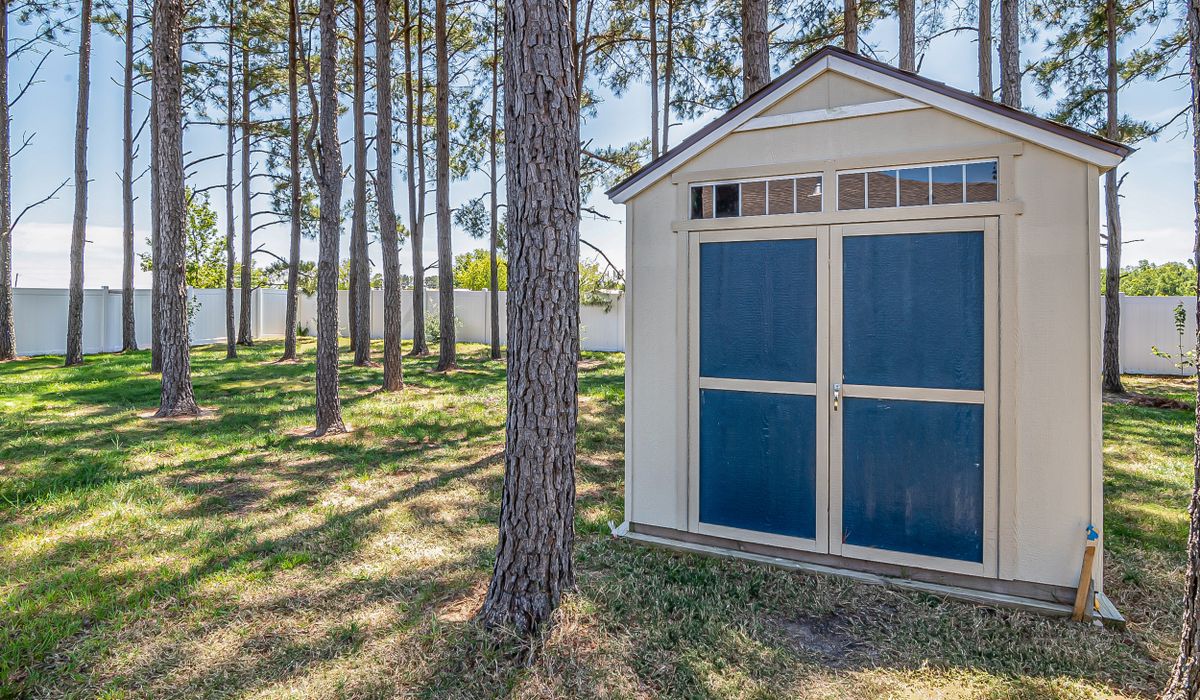
Building a secure shed door with strong locks
Your shed is only as secure as the weakest part of its door. It doesn't matter how sturdy the walls are if a thief can pop the hinges with a screwdriver or lever the door away from the frame in seconds. The good news is that most garden sheds fail on a handful of predictable weak points, and every one of them can be fixed with a few hours' work and a modest budget. This guide walks through upgrading the door itself, reinforcing the frame, fitting proper locks and hasps, and finishing with a ground anchor for the truly determined intruder.
Start with the door itself
A hollow, wafer-thin door is an invitation. If your shed has a standard 12mm overlap door with a bit of bracing, it will flex and splinter under a decent kick. Your first move is to make the door solid, or replace it entirely.
- If you're keeping the existing door, screw a sheet of 12mm exterior-grade plywood to the inside face, cutting it to fit snugly between the bracing. This adds mass and stops the panel flexing.
- Better still, fit a solid door made from 18mm exterior ply, or a framed ledge-and-brace door in treated timber. Buy or build one with a full perimeter frame, not just a face panel.
- Fit the door so it sits flush within the opening, with as little gap around the edges as possible. A 5mm gap is a levering point; a 2mm gap is not.
- If your shed has two doors, secure the inactive one permanently with internal bolts at top and bottom, so an intruder can't simply open both.
Remember that the door is only half the story. If it's strong but the frame around it is soft, the whole assembly will give way together.
Reinforce the frame and the hinge side
Most forced entries happen on the hinge side, not the lock side. Thieves know a hinge pin can be knocked out or the screws pulled straight through soft timber. Address this first.
- Replace hinge screws with 75mm coach screws or security screws that bite deep into the frame, not just the door.
- Fit security hinges with non-removable pins, or add hinge bolts (also called dog bolts) on the hinge side. These are cheap, discreet and stop the door being lifted off even if the pins come out.
- Line the frame's opening edge with a steel reinforcement plate, or screw a length of 25mm x 50mm hardwood to the frame where the lock and hasp sit. This gives the fixings something solid to grip.
- Check the frame is fixed to the shed's corner posts with proper structural screws, not 40mm nails. A frame that moves is a frame that fails.
If the frame is rotten at the base, cut out the soft timber and splice in a treated replacement section before you fit any hardware. New locks on a decayed frame are wasted money.
Choose locks and hasps that work together
One lock is not enough. The aim is to slow a thief down past the point where the noise and time become a problem. Layer your defences.
- Fit a five-lever mortice deadlock, or a good-quality insurance-rated rim lock, into the door itself. Look for a lock tested to a recognised British standard rather than a budget euro-cylinder that can be snapped.
- Add a heavy-duty hasp and staple with a hardened steel shackle, ideally with a closed or shrouded design so the shackle can't be cut with bolt croppers. Fix it with coach bolts that pass right through the door, with dome-headed nuts on the outside so they can't be unscrewed.
- Use a closed-shackle padlock rated to at least Sold Secure Bronze, and keep it snug against the hasp so there's no room for a hacksaw blade.
- Consider an internal wooden or steel bar that drops into brackets on both sides of the frame, secured by a padlock on the inside. This gives you security even if the outer lock is defeated.
Never rely on a single hasp-and-staple with a cheap padlock. That's the classic shed setup and it's the first thing an experienced thief will target.
Don't forget the base and the ground anchor
The bottom of the door is often overlooked. Fit a heavy-duty ground anchor or floor bolt where the door meets the base, so the door can't be levered outwards from the bottom corner.
- Bolt a hardened steel ground anchor into a concrete base, or into a substantial timber floor with long coach bolts.
- Use a matching padlock to secure the door to the anchor when the shed is closed.
- If your shed sits on a timber base, add a steel plate or a purpose-made door bar that spans the bottom of the opening and locks into the frame on both sides.
This single addition defeats the "kick the bottom corner and pull" method, which is one of the most common ways sheds are breached.
Small details that make a big difference
Once the main hardware is in place, a few finishing touches are worth the effort.
- Fit a curtain or a piece of board inside the window, or obscure the glass, so nobody can see what's worth stealing.
- Use security screws throughout, with heads that can't be removed with a standard screwdriver.
- Add a battery-powered alarm or a simple shed siren that triggers when the door opens. Noise is a powerful deterrent.
- Keep the shed well-lit at night, or fit a motion-sensor light above the door.
- Check your shed insurance policy — some specify a minimum lock standard, so match your hardware to their requirements before you buy.
None of these steps is expensive on its own, but together they turn a soft target into an awkward one. A thief wants a quick, quiet job. Make your shed slow, noisy and frustrating, and they'll move on to the next garden.


Garden Sheds
-
Use wall-mounted hooks, shelf brackets and clear storage boxes. Group tools by task so you can find what you need quickly.

Gazebos


-

Long established fact that a reader will be distracted
-

Long established fact that a reader will be distracted
-

Long established fact that a reader will be distracted

Summerhouses
Karla Gleichauf
12 May 2017 at 05:28 pm
On the other hand, we denounce with righteous indignation and dislike men who are so beguiled and demoralized by the charms of pleasure of the moment
M Shyamalan
12 May 2017 at 05:28 pm
On the other hand, we denounce with righteous indignation and dislike men who are so beguiled and demoralized by the charms of pleasure of the moment
Liz Montano
12 May 2017 at 05:28 pm
On the other hand, we denounce with righteous indignation and dislike men who are so beguiled and demoralized by the charms of pleasure of the moment